Chaos Is the Product
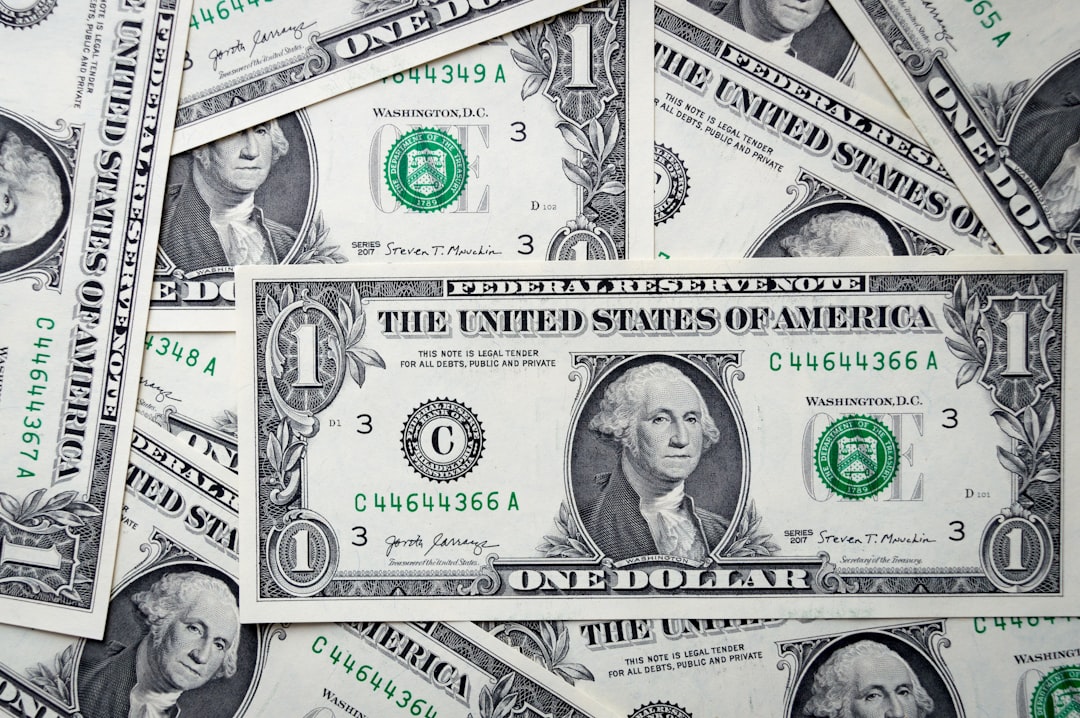
Trump's tariffs are not trade policy — they are the coercive mechanism of a planned monetary reset, documented in Stephen Miran's "Mar-a-Lago Accord," which proposes using the tariff threat to pressure allies into accepting a coordinated dollar devaluation. With $39 trillion in debt, a double-digit decline in the DXY, and global capital migrating out of Treasuries, the chaos is not a side effect of this policy. It is the product.

There is a comfortable illusion that chaos is always a mistake. That when empires stumble, someone must have miscalculated. August 1971 should have cured us of that.
On a Sunday night, Richard Nixon interrupted regular television programming to announce that the United States was ending the convertibility of the dollar into gold. Fifty-five minutes. No consultation with allies. No warning to Bretton Woods partners. Treasury Secretary John Connally had been more candid in private, days earlier, during the secret meetings at Camp David: "It's our dollar, but it's your problem." The international monetary system that had organized the postwar world was dissolved over a weekend, while the world slept. That was not a mistake. That was a decision.
Fifty-five years later, something similar is happening. Except this time, there is a paper explaining how it works.
In November 2024, Stephen Miran — then at Hudson Bay Capital, now chair of the Council of Economic Advisers under Donald Trump — published a 41-page essay titled "A User's Guide to Restructuring the Global Trading System." The Financial Times called him "the architect of Trump's tariffs." The document became known as the "Mar-a-Lago Accord."
The central thesis is not about trade. It is about the dollar.
Miran starts from a premise that orthodox economics accepts but rarely discusses out loud: the dollar is structurally overvalued because the entire world wants to hold it as a reserve. That artificial demand pushes the exchange rate up, makes American exports expensive, makes imports cheap, and produces decades of trade deficits. America exports paper — Treasury bonds — and imports manufactured goods. The result is a silent deindustrialization that has lasted generations.
The proposed solution is a coordinated devaluation of the dollar. And the lever to force that coordination is tariffs.
Read that again, slowly.
The tariffs are not the objective. They are the instrument of coercion. The idea is to use the tariff threat to bring allies to the table — much as in 1985 the Plaza Hotel brought together the finance ministers of the United States, France, Germany, Japan, and the United Kingdom for the Plaza Accord, which produced a 40% depreciation of the dollar over two years. Miran wants a new Plaza. Only this time, with a knife at the guests' throats.
Enter Brent Johnson, founder of Santiago Capital, with what he calls the Dollar Milkshake Theory.
Johnson developed the theory in 2018. The image is simple: imagine every country in the world drinking a milkshake through its own straw. The United States has the widest straw. The dollar, as the global reserve currency, sucks capital from every corner of the international financial system into itself — especially under stress. Crisis in Argentina? Capital flies to dollars. Turbulence in Europe? Capital flies to dollars. All of this regardless of what Americans actually want.
Johnson predicted, in 2018, the end of the zero-rate era, the strengthening of the dollar, capital inflows into the United States, and mounting pressure on emerging markets. He got most of it right.
The paradox he did not resolve — and the one that is now settling in — is this: the milkshake can suck everything inward. And then melt from the inside out.
The DXY, the index that measures the dollar against a basket of major currencies, lost roughly 11% between January and June 2025. It was the dollar's worst first half since 1973 — the year floating exchange rates formally replaced the last remnants of Bretton Woods. The decline continued into 2026, with the index breaking through 97 — levels not seen in years — while Morgan Stanley analysts projected another 10% loss by year-end.
All of this while Trump was announcing tariffs. Universal tariffs of 10%. Tariffs on European allies. Tariffs on South Korea and India. The so-called "Liberation Day tariffs" sent the DXY down 2% in a single day in April 2025.
Every market consensus said the opposite would happen. Tariffs raise the cost of imports, reinforce the domestic currency. That is the textbook. The dollar was supposed to rise with tariffs. It did not rise.
Why?
Because the market began to understand that the tariffs were not trade policy. They were a signal of systemic rupture. They were an announcement that the rules of the game would be rewritten. And when the rules of the game are rewritten, capital does not rush to the center — it flees to the margins.
American debt reached $36 trillion at the end of 2024. In March 2026, it sits at $39 trillion. It grows by $1 trillion every three months — a pace that outstrips any politically viable scenario for spending cuts. The debt-to-GDP ratio stands at 122%, above the historical peak the United States reached after World War II.
There are, mathematically, a limited number of exits from a debt of that magnitude. The first is growing faster than the debt accumulates — unlikely. The second is cutting spending and raising taxes aggressively enough to run primary surpluses — politically suicidal. The third is outright default — unthinkable for a debt denominated in the global reserve currency. The fourth is inflation — eroding the real value of the debt over time. The fifth is currency devaluation — buying back foreign-held debt at cents on the dollar, since whoever holds Treasuries denominates that asset in dollars, and if the dollar falls 30%, the real cost of the debt falls with it.
Options four and five are the same thing viewed from different angles.
Miran knows this. The paper knows this. The tariffs know this.
Zoltan Pozsar, the Hungarian strategist who spent decades mapping global money markets, published in 2022 what he called "Bretton Woods III." The thesis: we are moving out of a system based on "inside money" — dollars and American Treasuries — into a system based on "outside money" — gold, commodities, physical assets. The global east was repatriating reserves outside the dollar system. By 2025, nations were selling American Treasuries at a record pace, redirecting capital into gold and real assets.
Imagine an office building that, for decades, was the only one in the city with air conditioning. Everyone rented there. The landlord could charge whatever he wanted because there was no alternative. Then, slowly, other buildings begin installing their own climate systems. The flow of tenants does not stop all at once. But every year that passes, occupancy slips a little further.
That is what Bretton Woods III describes. Not a dramatic rupture. A slow erosion of exclusivity.
The point that no one is connecting with sufficient clarity is this: what Miran proposes, what the tariffs are executing, and what the DXY collapse is signaling may be the same operation viewed from three different angles.
The tariffs destabilize global trade. The destabilization weakens the dollar — because it destroys confidence in the reliability of American policy. The weaker dollar devalues the real burden of the debt. Foreign holders of Treasuries — China, Japan, Saudi Arabia, Europe — are sitting on paper that is worth less every quarter. The United States, at the end of the cycle, can buy back that debt at depressed prices, or simply let inflation corrode its value while offering apologies for the "global instability."
The world gets the bill. The United States gets the reset.
This is roughly what happened after the Plaza Accord of 1985 — but in slow motion, with consensus, with diplomatic civility. The yen appreciated 40% in two years. Japan, pressured to surrender its export competitiveness, responded with domestic monetary stimulus that inflated the largest asset bubble in modern history. When the bubble burst in the early 1990s, Japan entered a recession that lasted a decade and a half. Japan's Lost Decade was, in part, the price Tokyo paid for the "accord" of 1985.
This time, there is no civility. There is no Plaza Hotel. There is no five-party agreement drafted by Oxford-educated ministers. There are tariffs, threats, and a 41-page paper that most analysts still read as a trade policy proposal.
There is a scene that comes to mind when I think about this architecture. A magician in a second-rate cabaret. The audience watches the left hand — where the gestures are wide, dramatic, full of noise. The right hand is still. That is where the trick happens.
The tariffs are the left hand.
The question that should be asked — in Davos, in Brussels, in Tokyo, in Beijing — is not "how do we respond to the tariffs?" It is: who designed this system, and who controls the exit?
Bretton Woods I was created in 1944 by 730 delegates from 44 nations gathered at a resort in New Hampshire. It took three weeks to negotiate. Nixon dismantled it in 55 minutes of television.
What is being built now has no inauguration date. No conference. No resort in New Hampshire. It has a paper from November 2024, tariffs announced by tweet, and a DXY that falls while everyone waits for it to rise.
The milkshake is still being sipped. The American straw is still the widest. But someone has punched a hole in the bottom of the cup.
The question is not whether the system will change. The question is who reaches the other side holding real assets — and who arrives holding the paper.
M. Casamata writes from where the view is best: from the inside. A chronicler and observer of wars he never fought and politicians he never voted for. He believes the world is heading somewhere — he's just not sure where. Writing at The Bunker 26 since 2026.
Comments
Offensive or disrespectful comments may be removed by the administration.