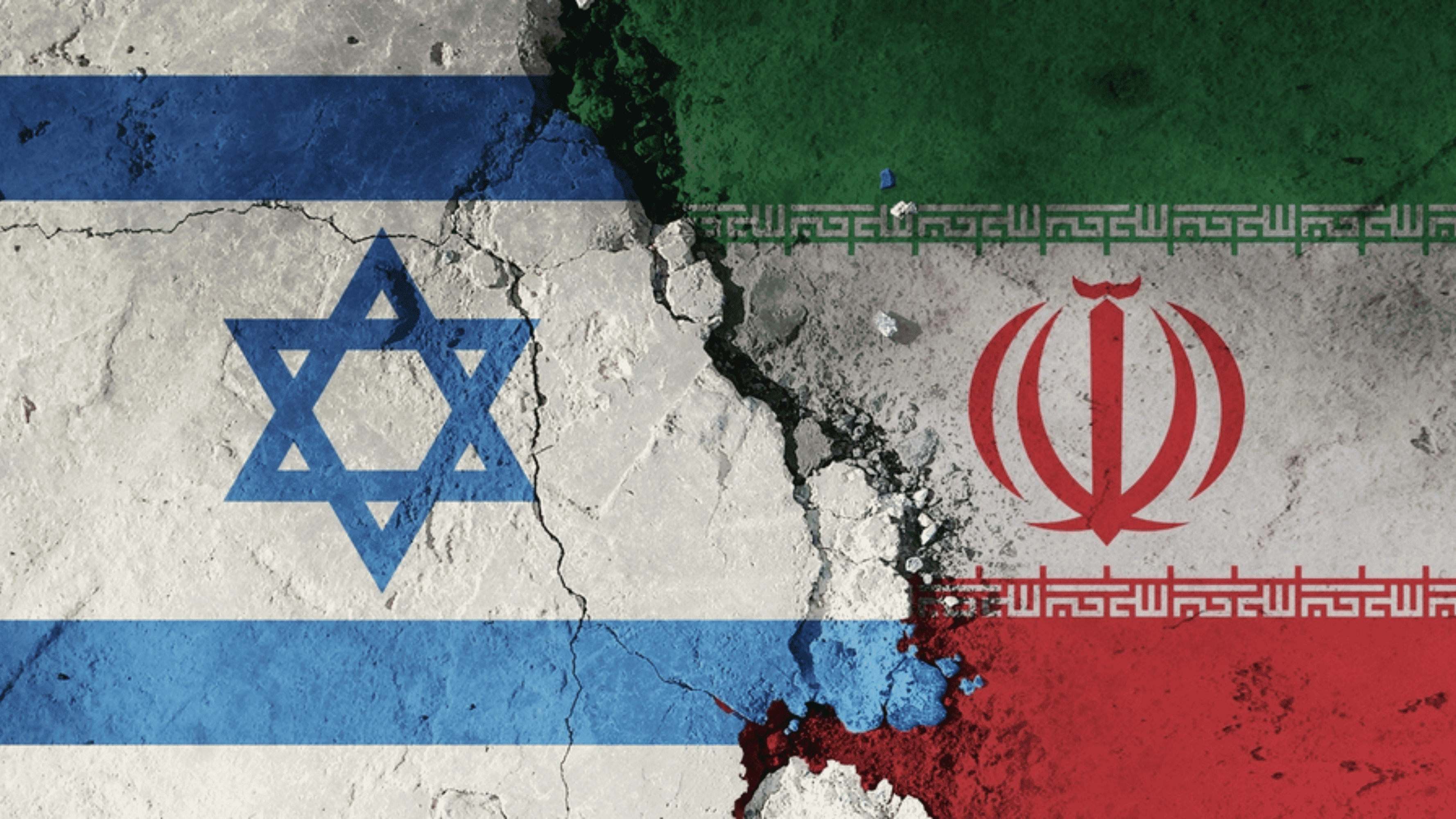
The Hatred That Awaits the End of the World
Iran and Israel were once close allies — they traded oil together and co-developed missiles in secret projects. The 1979 Revolution transformed that partnership into existential hatred, fueled by an apocalyptic theology that sees Israel's destruction as a prerequisite for the coming of the Mahdi, the Shia messiah. Understanding this war requires looking beyond geopolitics.

Before they were mortal enemies, Iran and Israel were friends. Good friends. The kind that sell each other oil at a discount and co-develop missile systems in secret. It sounds like a joke, but it isn't. If you want to understand the war that is shaking the world right now, you need to go back in time — much further than you think.
Jews have lived in Iran for over 2,500 years. Read that again. Two thousand five hundred. Since the era of Cyrus the Great, the Persian king who freed the Jews from captivity in Babylon and allowed them to return to Jerusalem to rebuild their Temple. Cyrus is mentioned in the Bible as an instrument of God. A Persian. An Iranian, if we want to be anachronistic. For the Jewish people, Persia was not the enemy — it was the hand that opened the door to freedom.
That coexistence lasted millennia. When, in 1947, the United Nations proposed dividing Palestine into two states — one Jewish, one Arab — Iran not only participated in the vote but actually suggested a federation in which Arabs and Jews would work together. It voted against the final resolution, true, but not out of hatred for Israel. Quite the opposite: it thought the proposal didn't give enough to the Palestinians.
When Israel declared independence in 1948 and every Arab neighbor attacked immediately — Egypt, Syria, Jordan, Iraq, Lebanon — Iran stayed out. It didn't join the fight. And in the decades that followed, while the Arab world swore to destroy Israel, Iran was doing business with it.
Starting in 1955, Iran began selling oil to Israel at reduced prices. When Arab countries refused to sell, the Iranians said: we'll sell it. And they did. They set up joint companies in Panama and Switzerland under an entity called Trans-Asiatic Oil. During the 1973 crisis, when OPEC embargoed oil to the United States and Europe, Iran didn't join the boycott. It kept producing normally. And got richer for it.
In 1977, Iranians and Israelis signed Project Flower — a joint military program to develop advanced missile systems. It was one of six oil-for-arms contracts, valued at $1.2 billion. They even discussed fitting nuclear warheads. They dropped the idea because it "would raise a problem with the Americans." The quote is from a CIA report.
Two countries building missiles together. Today, one of them bombs the other. What happened?
1979 happened.
The Iranian Revolution toppled Shah Mohammad Reza Pahlavi — ally of the United States, ally of Israel, modernizer of a country that didn't want to be modernized — and installed Ayatollah Ruhollah Khomeini, a Shia cleric who had spent 14 years in exile. Khomeini wasn't a politician. He was a theologian. And his theology had three absolutely non-negotiable commandments: expel the United States from the Middle East, replace Israel with Palestine, and destroy the Western-led world order.
Israel's embassy in Tehran was handed over to the Palestinians. Habib Elghanian, one of Iran's most prominent Jewish businessmen, was executed on charges of spying for Israel. The message was crystal clear: Jews were no longer welcome.
And then came the slogans. If you've never heard the words in Farsi, let me share them: "Marg bar Esrāʾil!" and "Marg bar Āmrikā!" — Death to Israel, Death to America. These two phrases became the unofficial national anthem of the Islamic Republic. They are chanted at every Friday prayer, every regime rally, every revolution anniversary. Year after year, effigies of American presidents are burned while crowds repeat, in unison, a call for the death of two entire countries.
Netanyahu, commenting on Khamenei's killing in last week's strikes, said a line that sums up four decades: "For 47 years, the Ayatollah regime has chanted 'Death to Israel' and 'Death to America.' It has spilled our blood, murdered many Americans, and slaughtered its own people."
But there is something that geopolitics and economics cannot explain. Something most Western analysts ignore because they don't know what to do with it — because it seems too irrational, too primitive. Something that is, however, the key to everything.
Iran doesn't want to destroy Israel merely over territory, oil, or regional influence. Iran wants to destroy Israel because it believes — literally, theologically, without metaphor — that the destruction of Israel is a prerequisite for the end of the world.
Stay with me. I'll explain.
Iran is a Shia country. More specifically, it follows Twelver Shiism — the belief in twelve Imams, direct descendants of the Prophet Muhammad through Ali, his son-in-law. For the Shia, these Twelve Imams were infallible, supreme spiritual guides. Eleven were killed. The twelfth — Muhammad al-Mahdi, born in 868 — disappeared as a child. He didn't die. He entered what the Shia call "occultation": God hid him. He is alive, somewhere, and has been for over eleven hundred years, waiting for the right moment to return.
When he returns, the Mahdi — the "Guided One" — will lead a final apocalyptic battle against the forces of evil, establish divine justice, and bring about Islamic dominion over the entire world. It is the Shia version of the Apocalypse. Their messiah.
So far, you might think: fine, it's a religious belief like any other. The problem is what comes next.
Unlike other messianic traditions, where peace and harmony precede the savior's arrival, in Twelver Shiism the logic is inverted. The Mahdi doesn't come when the world is at peace. He comes when the world is on fire. Chaos is a prerequisite. War is a prerequisite. And — here is the point that changes everything — the destruction of Israel is a prerequisite.
Clerics affiliated with Iran's Revolutionary Guard preach, based on hadiths (Islamic traditions), that the Jewish state must be destroyed before the Mahdi's arrival and that Shia Muslims will be fighting against the Jews as a precondition for his reappearance. This is not rhetoric. It is doctrine. It is what they teach in military academies, what they repeat in mosques, what guides the country's foreign policy.
Ahmadinejad, when he was president, said openly: "Our mission is to turn Iran into the country of the Hidden Imam." He gave a speech at the UN in 2005 and later claimed, on video, that he felt a "glow" and a "halo" around him, and that world leaders didn't blink for 27 minutes. It wasn't a figure of speech. He believed it.
Think about what this means for nuclear politics. During the Cold War, the logic of Mutually Assured Destruction — MAD — kept the superpowers in check. Nobody fires first because they know they'll be destroyed in return. But what if one side wants destruction? What if it believes destruction is the path to salvation? The logic of deterrence doesn't work against someone who desires the apocalypse.
This is what makes a nuclear Iran so terrifying to Israel. It's not a rational adversary in the Western sense. It's an adversary whose rationality operates on a different frequency — the frequency of the end times.
And this theology doesn't stay confined within Iran's borders. It spreads across the entire so-called Axis of Resistance — Hezbollah in Lebanon, Hamas in Gaza, the Houthis in Yemen. The Houthi slogan goes further than Iran's: "God is great, death to America, death to Israel, curse the Jews, victory for Islam." These are not figures of speech. They are articles of faith.
The curious — and tragic — thing is that much of the Iranian people don't share any of this. The young generation, born after the revolution, is fed up. In 2009, during the Green Movement, they shouted in the streets: "Not Gaza, not Lebanon, my life for Iran!" In 2018, football fans in Tehran chanted "Death to Palestine" — flipping the regime's official slogan on its head. In 2023, students forced to chant "Death to Israel" in schools changed the chorus to "Death to Palestine" in protest.
Iranian diaspora members marched alongside Jewish communities in the United States and Europe after the Hamas attack in October 2023. The exiled Crown Prince Reza Pahlavi visited Israel that same year, carrying a message of friendship. The Persian people and the Jewish people were never natural enemies. They are hostages of a theocracy that kidnapped an entire nation in the name of a prophecy.
Now, with Khamenei dead, Iran faces a moment of choice. The most likely candidate for new Supreme Leader is Mojtaba Khamenei, Ali's son. A man of the shadows, with deep ties to the Revolutionary Guard. If he takes over, the signal will be clear: the war continues. The pursuit of the Mahdi continues. The hatred of Israel continues.
Because this hatred is not political. It's not territorial. It's not ethnic. It's theological. And against theology, peace treaties don't work. Sanctions don't work. Diplomacy doesn't work.
Twenty-five hundred years ago, a Persian king freed the Jews. In 1977, Iranians and Israelis were designing missiles together. Today, all that remains of that ancient friendship is the echo of a cry repeated every Friday in Tehran: death, death, death.
The story of Iran and Israel is not the story of an ancient hatred. It's the story of a murdered friendship. And the murderer has a name: it's called Revolution.
M. Casamata writes from where the view is best: from the inside. A chronicler and observer of wars he never fought and politicians he never voted for. He believes the world is heading somewhere — he's just not sure where. Writing at The Bunker 26 since 2026.
Comments
Offensive or disrespectful comments may be removed by the administration.