The Most Important Issue
At the May 2026 Beijing summit, Trump brought the largest delegation of American CEOs in presidential history to discuss chips and AI. Xi warned that Taiwan is "the most important issue" and could lead to conflict. The White House statement never mentioned Taiwan. The chips being negotiated are made by TSMC — which is in Taiwan.
On May 13, 2026, Donald Trump went to China to talk about artificial intelligence chips. The chips are made in Taiwan. Taiwan was not mentioned once in the official statement.
Great start.
The largest delegation of American CEOs ever assembled for a presidential visit landed in Beijing. Tim Cook of Apple — a company that manufactures 80% of its iPhones in a China Trump spent two terms trying to contain. Jensen Huang of Nvidia — whose H200 chips are the engine of the AI race, and whom Trump literally picked up in Alaska, mid-flight, like fetching someone from the airport. Elon Musk. Larry Fink. The heads of Visa, Qualcomm, Micron, Meta.
A delegation so impressive that Jensen Huang eating noodles on a Beijing street went globally viral. That was, arguably, the most concrete outcome of the summit.
Xi Jinping received them with full state honors. Banquet. Cooperation speech. Promise to "open up more." Standard diplomatic language, which always means precisely nothing until something is signed beneath it.
Then Xi went off script.
He said, out loud and without ceremony, that Taiwan is "the most important issue" in US-China relations. That a mistake in handling it could lead to "shocks and even conflicts."
Trump responded on Fox News. Said US policy on Taiwan "remains unchanged."
The official White House statement did not mention Taiwan.
Not once.
---
Let's think about what was happening in that room.
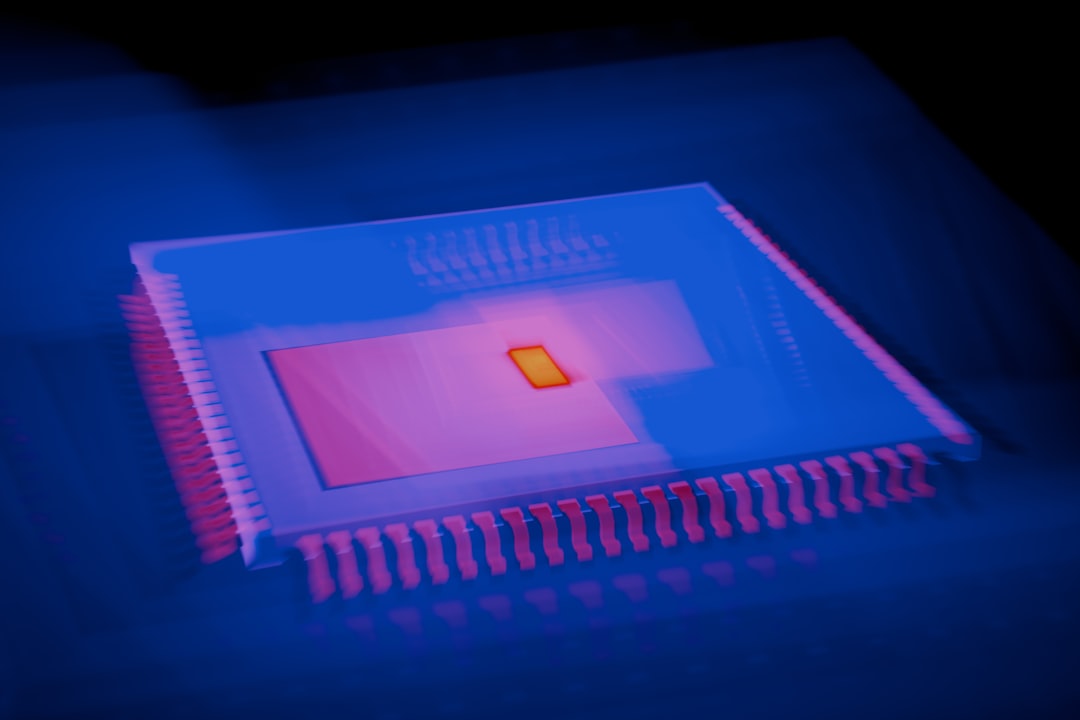
Jensen Huang went to Beijing to negotiate the sale of H200 chips to ten Chinese companies. The H200 chips are manufactured by TSMC. TSMC is in Taiwan. The same Taiwan that had just been described as the main trigger of a potential conflict between the two largest powers in the world.
Tim Cook went to Beijing to protect Apple's supply chain. Eighty percent of iPhones are assembled in China. The semiconductors inside each iPhone come from TSMC factories. TSMC is in Taiwan.
Qualcomm. Micron. Nvidia. The entire chip architecture that holds up the American tech economy runs, necessarily, through a 36,000-square-kilometer island that the other leader in the room had just described as the most important issue in the bilateral relationship.
It's like sitting down to negotiate the menu and having someone point at the restaurant and say: "By the way, this place could go up in flames at any moment." And then you order the appetizer and pretend you didn't hear.
---
There's a historical precedent for this kind of silence.
In 1945, at Yalta, Churchill, Roosevelt and Stalin decided the postwar world. Poland was not at the table. Its future was decided without it, by powers with their own urgent interests. Poland learned, decades later, that the result wasn't quite what it had hoped.
Taiwan was not at the table in Beijing in May 2026. The future of the global semiconductor supply chain — which runs, necessarily, through Taiwan — was negotiated by powers with their own urgent interests. The outcome is not yet known. But Yalta seemed reasonable at the time too.
TSMC, for the record, has already understood the message. It's building factories in Arizona. It opened a plant in Japan. The industry is doing what governments cannot: preparing for the unthinkable while leaders discuss the menu.
---
Here's a detail worth a moment of attention.
Days before the summit, the US Commerce Department approved the sale of H200 chips to those ten Chinese companies. With unusual conditions: 25% of profits go to the US, and the chips must pass through American territory before reaching China.
China refused. Suspicious of American backdoors — surveillance or sabotage capabilities built into the hardware.
That matters. The US spent five years building a semiconductor export control regime precisely to prevent China from accessing the AI frontier. Trump flew to Beijing with the world's most important chip manufacturer — Jensen Huang, collected in Alaska, remember — and announced an "opening" that China rejected at the first offer on grounds of fundamental distrust.
What happens to five years of American chip export policy when a presidential phone call can suspend it mid-flight?
Open question. The next one is too.
---
Final result of two days of summit meetings with the largest business delegation in American presidential history: 200 Boeing aircraft.
Two hundred planes. From a delegation that came to discuss AI, chips, rare earths and the technological future of the century.
Jensen Huang eating noodles became a meme. The chip export control became a footnote. Taiwan became the subject that didn't make it into the statement.
---
Xi was the only one who said out loud what was in the room.
Taiwan is the most important issue. Mistakes can lead to conflicts.
Trump said nothing had changed in US policy. Went on Fox News. Flew home.
Taiwan said nothing and thanked the US for its "firm support" — with no new guarantees, no new commitments, no lines drawn more clearly than before.
The American silence on Taiwan in Beijing may be the famous "strategic ambiguity" — deliberate policy Washington has maintained for decades. Or it may be what Xi wanted it to be: a signal that the commercial interests of Tim Cook, Jensen Huang and the other executives in that room weigh more, on the real scale, than any statement about sovereignty.
Taiwan has every reason to know the difference between those two things.
And every reason not to ask out loud.
---
Xi will visit the United States in the fall. Which suggests Beijing was a prologue, not a conclusion.
The most important issue, said Xi.
The statement didn't mention it.
Sometimes what isn't written says more than what is.
M. Casamata writes from where the view is best: from the inside. A chronicler and observer of wars he never fought and politicians he never voted for. He believes the world is heading somewhere — he's just not sure where. Writing at The Bunker 26 since 2026.
Comments
Offensive or disrespectful comments may be removed by the administration.