The Pilot Worth More Than the Deal
When Trump's ultimatum to Iran expired with no result, a heroic rescue gave the president the exit he needed without looking weak. The pilot was real; the political use of his story, equally so. M. Casamata on the hero as a tool of diplomatic timeline management.

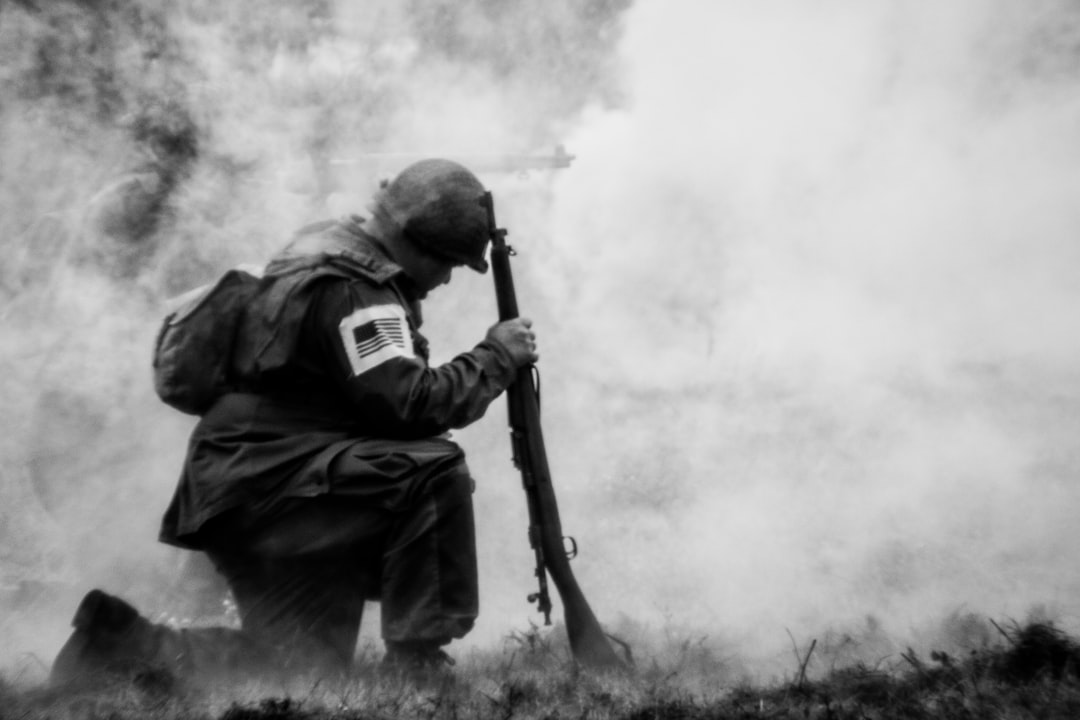
In a conflict, a hero is worth more than a deal. A hero you can put on television. A deal you have to explain.
On April 3rd, Iran shot down an American F-15E Strike Eagle over its own territory. One of the crew members went missing for more than 24 hours inside enemy territory. The day before, Trump had issued a 48-hour ultimatum: reopen the Strait of Hormuz or "hell will descend upon you."
The deadline expired on April 4th.
On April 5th, Trump confirmed the rescue: both crew members had been recovered in what he described as "one of the most daring search and rescue operations in United States history." The airman was "seriously wounded and very brave." Then Trump announced he would not bomb Iran's power plants, bridges, or vital infrastructure for the next five days.
Five days. After a 48-hour ultimatum that had already expired more than a day earlier.
I'm not saying the rescue was staged. Rescues happen. Pilots go down. Military personnel risk their lives and sometimes come home. That is real. But politics doesn't wait for the hero to land before it starts using him — it uses him the second he touches the ground.
The mechanism is not new.
In November 1979, Iranian revolutionaries stormed the American embassy in Tehran and took 52 hostages. Jimmy Carter spent 444 days trying to free them — through negotiation, economic pressure, and a military rescue operation that failed in the desert and killed eight men without freeing anyone. The hostages were released on the exact day Ronald Reagan was inaugurated. Not a day before. Not a day after.
The coincidence has been debated by historians for decades. What isn't debated is the narrative effect: it wasn't the facts that set the pace of the crisis. It was the image America had of itself — watching those people on the evening news, day after day, helpless. Carter lost his reelection not because the negotiations failed — they ultimately succeeded. He lost because the narrative of failure arrived first.
In 2003, the story of Specialist Jessica Lynch arrived in Hollywood trailer format: ambushed by Iraqi forces, fought back with courage until her last bullet, captured, then heroically rescued in a nighttime operation filmed by the military itself. The Pentagon sold the story. The American press bought it. Weeks later, it fell apart. Jessica hadn't been in combat — her vehicle had crashed. The rescue happened at a hospital with no armed resistance. The footage was the product; the hero was the packaging.
Am I saying the American pilot rescued from Iran is a lie? No. I'm saying that in war — and in war politics — the hero always plays two roles: the one that appears on screen and the one that happens backstage. The first serves the second.
Trump was in an impossible position on the morning of April 5th. His ultimatum had expired. Iran hadn't budged, hadn't negotiated, hadn't come back to the table. Bombing power plants — as he had threatened — meant escalating a conflict already unpopular in Congress, with China and Russia blocking any UN resolution, and with European and Asian allies in uncomfortable silence. Doing nothing meant being called weak.
The rescue solved both problems at once.
Suddenly the narrative wasn't "Trump failed to follow through on his deadline." It was "Trump brought our heroes home." The five-day pause wasn't a retreat. It was a humanitarian gesture. Leadership with a heart. The man who said "hell" proved he also knows how to say "hero."
"The Art of the Deal" — the book that was ghostwritten but that Trump presents as autobiography — turns out to have an unwritten chapter. Sometimes the best play isn't the deal. It's the intermission.
The question few are asking out loud is simple: what happens after five days?
Iran keeps the Strait of Hormuz closed. Oil stays above $126 a barrel. Twenty percent of the world's petroleum and a significant share of global liquefied natural gas remain blocked in a corridor thirty miles wide — roughly the distance from Manhattan to Newark. China, which buys 75% of the oil that passes through the strait, has refused to sponsor any military operation to reopen it. NATO responded with the enthusiasm of someone invited to a party they know they'll end up cleaning after. The UN is paralyzed.
The Iran Trump faces on April 5th, 2026 doesn't have a Khamenei who could, eventually, sit at a table and sign a deal — because the US and Israel helped eliminate him in February. Negotiating with a decapitated state is different from negotiating with a weakened one. In a weakened state, you know who can say yes. In a decapitated one, you don't even know who has the authority to sit down.
Trump has five days of media heroism. After that, he has the same crisis, the same closed strait, the same adversary with no clear leadership to negotiate with.
In the theater of war, the hero is the intermission.
The play goes on.
M. Casamata writes from where the view is best: from the inside. A chronicler and observer of wars he never fought and politicians he never voted for. He believes the world is heading somewhere — he's just not sure where. Writing at The Bunker 26 since 2026.
Comments
Offensive or disrespectful comments may be removed by the administration.