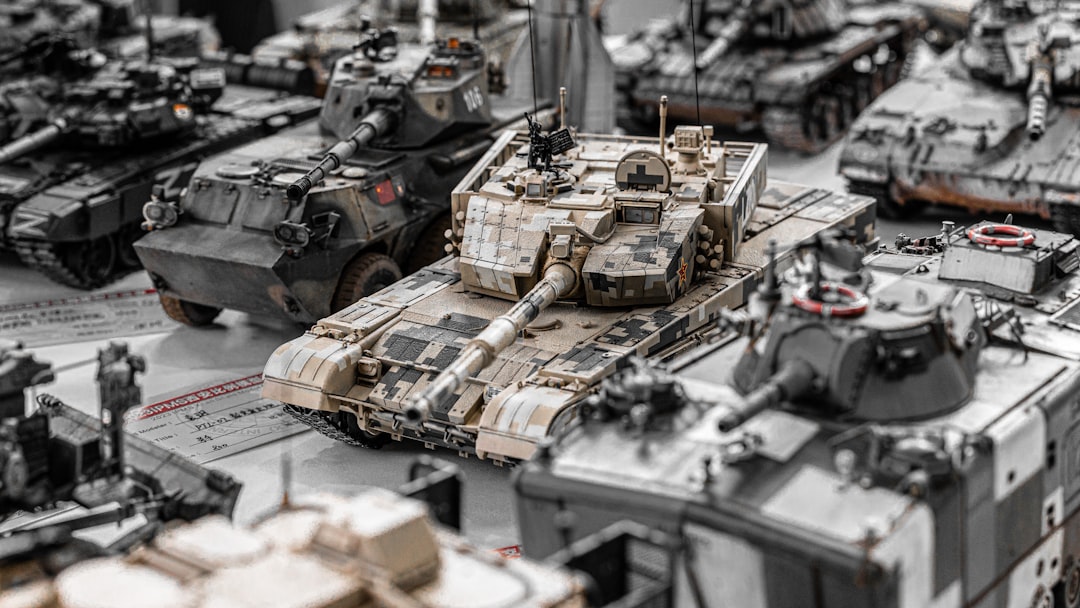
The War Factory
Trump's failed Iran negotiations in Islamabad expose the Rabbit Hole: while peace talks collapsed, Palantir ($10B), Anduril ($20B), and Anthropic's Claude were billing the Pentagon for battlefield AI. The same ecosystem managing the conflict is the one profiting from its continuation.

In 2003, Dick Cheney left the Halliburton board to become Vice President of the United States. Twenty-three years later, the move reversed itself: the vice president is the partner. And the company is the state.
JD Vance arrived in Islamabad on Saturday to lead the American delegation in negotiations with Iran. Twenty-one hours of talks, according to the statements. Most points were agreed upon. Nuclear was not. Vance flew home. Trump announced a blockade of the Strait of Hormuz. And somewhere in Palo Alto, Wall Street analysts revised Palantir's revenue projections upward.
Coincidence.
Before entering politics, JD Vance was a partner at Rise of the Rest, a venture capital firm. One of its frequent co-investors: Anduril Industries, founded by Palmer Luckey. The same Anduril that in March closed a $20 billion contract with the U.S. Army to provide AI battlefield systems — exactly the kind of contract that only exists when there is a battlefield.
Peter Thiel, founder of Palantir, financed Vance's Senate campaign. Palantir closed $10 billion with the Pentagon this quarter. Palantir's Maven platform was used extensively in the offensive against Iran. Anthropic — another company with deep ties to Silicon Valley's venture capital ecosystem — provided Claude for "intelligence assessments, target identification, and battle scenario simulation" in preparing the strike.
Claude. The same Claude you might be using to read this.
This isn't a conspiracy theory. It's the supply chain of modern warfare, documented in press releases and public contract filings.
The point nobody is seeing isn't that a connection exists between Silicon Valley and the military complex. Everyone sees that. The blind spot is what that connection produces as a structural incentive: an architecture of power that needs war to grow.
Think like an engineer, not a political analyst.
When a defense company signs a $20 billion contract with the Pentagon, the contract has performance clauses, renewal terms, and expansion triggers. Performance is measured in real operations. Renewals depend on continued threats. Expansion requires new theaters of conflict. There's no growth roadmap for an "AI battlefield" company in a peaceful world.
Cheney's Halliburton was a clear case of conflict of interest — an infrastructure company profiting from reconstructing the Iraq that Cheney helped destroy. The model was crude, visible, investigable. Cheney was the villain in a film everyone understood.
The 2026 model is more sophisticated. Which makes it more dangerous.
It's not just reconstruction contracts. It's the apparatus of the state itself being replaced. DOGE — led by Musk, whose companies SpaceX and xAI hold billions in federal contracts — systematically dismantled civilian agencies: the EPA, the FDA, the State Department, the diplomatic arm that might have built an alternative to war. The DOE's nuclear division lost a third of its staff in January. A 31-year-old lawyer with no nuclear policy experience was placed at the Nuclear Regulatory Commission via DOGE.
The civilian state shrinks. The military-tech state grows.
Not coincidence. Design.
When you remove the diplomatic apparatus and dismantle the agencies that regulate defense companies, the only instrument left for foreign policy is the one that defense companies provide. It wasn't Trump who decided that America only knows how to fight. It was the architecture he built around himself.
Now look at Islamabad.
The negotiations failed. Iran wants to retain control of the Strait of Hormuz — which any basic geopolitical analysis would have predicted as the hardest point. The American delegation included not a single career diplomat. Vance, Witkoff, Kushner. A venture capitalist, a real estate magnate, and the son-in-law. Negotiating the most complex geopolitical agreement of the contemporary era.
Trump wrote that "the meeting went well." Hours later he announced the naval blockade.
There's a word for when a negotiator walks away from the table without a deal and immediately escalates militarily: failure. There's another word for when that failure produces an $8 immediate spike in Brent crude, and the biggest beneficiaries of that spike are the American oil producers who funded the campaign: business model.
The Strait of Hormuz blockade is the largest disruption to the global oil market since the 1970s energy crisis, according to the IEA. Brent is at $104 and climbing. Analysts project $150 if the conflict extends. Whoever holds reserves in the Permian Basin and Eagle Ford — that is, the American fracking industry — profits with every dollar of upside.
And China, India, Japan — the largest buyers of Gulf crude — scramble for alternatives. They pay the premium. American LNG exports surge. The "blockade" is also a market cornering strategy.
Maybe all of this is coincidence.
Maybe Trump genuinely tried for peace, Palantir would have landed those contracts regardless of the conflict, DOGE really is about efficiency, and the failure in Islamabad is simply diplomatic incompetence with no financial calculus behind it.
Maybe.
But there's a difference between what's possible and what's probable. And what's probable, when you trace the money flow, is that the Iran war is the largest innovation contract in American history — and the same people managing the conflict are the same people billing for it.
Eisenhower called it the military-industrial complex in 1961. It was a warning.
What exists in 2026 doesn't have a name yet. Because it's new. The military-tech complex: where the AI company identifying targets is also invested in by the vice president's former fund, and the nuclear regulatory position is filled by someone who came up through venture capital.
It's not the government outsourcing functions to the private sector. It's the private sector outsourcing the government to itself.
The difference is subtle. The consequences are not.
When Iran and the U.S. eventually sit back down — and they will, because the war has no clean exit for either side — the question nobody will ask on camera is this: which contracts expire when this ends?
And there's the blind spot. It's not that nobody is watching the American Technocracy. Plenty of people are watching. The question is what happens when the mechanism that produces the war is the same mechanism that produces the government that's supposed to end it.
It's a factory. Not of missiles.
Of conflict.
M. Casamata writes from where the view is best: from the inside. A chronicler and observer of wars he never fought and politicians he never voted for. He believes the world is heading somewhere — he's just not sure where. Writing at The Bunker 26 since 2026.
Comments
Offensive or disrespectful comments may be removed by the administration.